
Oral Cancer Screenings Plymouth
Get Ahead of a Dangerous Disease
Every year, tens of thousands of people across the U.S. are diagnosed with oral cancer. While this condition is usually manageable if it is diagnosed in its early stages, it can prove to be deadly if it is not caught at the right time! Our Plymouth team wants to help you get ahead of this dangerous disease; that is why we include oral cancer screenings as part of every routine checkup. Continue reading below to learn more about this potentially life-saving service.
Signs and Symptoms of Oral Cancer

Oral and oropharyngeal cancers can present a number of signs and symptoms, including:
- Persistent sores or ulcers in the mouth that do not heal
- Red or white patches on the gums, tongue, or lining of the mouth
- Lumps, thickening, or rough spots in the oral tissues
- Pain, tenderness, or numbness anywhere in the mouth or lips
- Difficulty chewing, swallowing, or moving the jaw or tongue
- Chronic sore throat or feeling that something is caught in the throat
- Hoarseness or change in voice
- Unexplained bleeding in the mouth
- Unexplained weight loss
- Loose teeth or poorly fitting dentures
- Swelling in the neck or jaw
What Does My Dentist Look for During an Oral Cancer Screening?
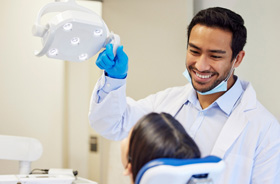
During your oral cancer screening, our team will look for the above-listed signs and symptoms of oral cancer. We will carefully examine your lips, tongue, gums, lymph nodes, and other important structures.
We will also take a thorough medical history to identify potential risk factors for oral cancer, which can include:
- Tobacco use
- Heavy alcohol consumption
- Human papillomavirus (HPV)
- Conditions that could compromise your immune system
- Older age
- Frequent or severe sunburns, especially on the face and lips
What Can I Expect During My Screening?

An oral cancer screening is painless, fast, and non-invasive. A member of our team will use their eyes and gloved hands to examine relevant tissues. If we notice any areas of concern, we will bring them to your attention and ask if there are other possible explanations for your symptoms.
If we suspect cancer, we can help you arrange for additional testing. (We cannot provide an official diagnosis; a biopsy is necessary for that.) If it turns out that you have oral cancer, we may coordinate with other members of your care team, such as an oral surgeon or oncologist, to provide the treatment you need to maximize your chances of beating the disease.
All adults should undergo an oral cancer screening at least once every 12 months, so if it has been a while since your last dental visit, now is the time to schedule an appointment. This simple and easy service might just save your life!