
Implant Dentures — Plymouth, MA
The Best Way to Treat Extensive Tooth Loss
Extensive tooth loss can cause a number of issues. For example, you might find it difficult or impossible to enjoy your favorite foods. It is also possible that you feel self-conscious about your smile. Traditional dentures can address those problems, but only to an extent. There is a better solution! Our team often recommends implant dentures in Plymouth as the best way to replace an entire arch of lost teeth. Continue reading to learn more about this remarkable treatment.
Why Choose Aveni Dental Professionals for Implant Dentures?
- 1 Start to finish dental implant treatment
- 2 Custom, high-quality restorations
- 3 Compassionate and friendly team
What Are Implant Dentures?
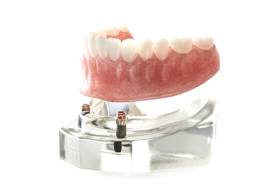
Traditional dentures rest on top of the gums; suction or adhesive holds them in place. Implant dentures are different. They are anchored in the mouth via prosthetic tooth roots (dental implants in Plymouth) that are surgically inserted into the jawbone. They are thus much stronger and sturdier than their traditional counterparts.
There are a couple different types of implant dentures:
Fixed/Permanent Implant Dentures
These are permanently attached to the implants that support them; they can only be removed by a dental professional. In most cases, fixed implant dentures require 4 – 6 dental implants per arch. Many patients enjoy the convenience of always having their replacement teeth in their mouth.
Removable Implant Dentures
Removable implant dentures, also called overdentures, are easy for patients to remove on their own. They are secured on their implants via ball sockets or a bar attachment, and they usually require fewer dental implants than fixed implant dentures.
The Implant Denture Procedure
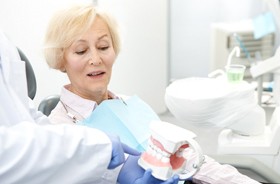
The implant denture procedure can vary from case to case, but it usually goes something like this:
- Your implant dentist in Plymouth will determine your candidacy for the treatment and begins to plan the road ahead of you.
- Implant placement surgery. After you complete any necessary preliminary treatment, we will surgically insert your dental implants.
- After you have healed adequately from the surgery, you will receive a beautiful, custom-designed permanent implant denture.
The entire process may take at least several months, but most patients would agree that the investment of time is well worth it!
Am I a Candidate for Implant Dentures?
You may be a candidate for implant dentures if:
- You have lost a significant number of teeth
- You are tired of your traditional dentures
- You are free of active gum disease
- You are healthy enough to undergo minor surgery
- Your jawbone is strong enough to support dental implants
- You have excellent oral care habits
Most patients are candidates for implant dentures, either right away or after some preliminary treatment. Our team will do all we can to help you qualify for this potentially life-changing procedure.
Benefits of Combining Dentures & Dental Implants

Some of the most noteworthy benefits of implant dentures include:
- They provide a strong bite force that can stand up to most foods
- The implants stimulate the jawbone and help to keep it strong and whole
- You can care for them similarly to how you would care for natural teeth
- They are incredibly comfortable
- They last much longer than traditional dentures, which makes them an excellent monetary value
Implant Dentures FAQs
Does it hurt to get implant dentures?
Our Plymouth team prioritizes patient comfort. We will thoroughly numb your mouth during your surgery. This will prevent you from feeling pain. If you experience any sensations, it should be pressure rather than outright discomfort.
After the local anesthesia wears off, you can expect your mouth to be sore for several days. This should subside relatively quickly, and your mouth may feel normal within a week or two. In the meantime, pain relievers, a soft diet, and other measures can help you get by.
Severe or prolonged pain is not normal. Call our office right away if you experience this or any other unusual symptoms, such as extreme swelling, pus, or an implant that feels loose.
What can cause dental implants to fail?
Dental implant failure is rare, but it can occur in some cases. Often, it is due to an infection known as peri-implantitis. This is a form of gum disease that occurs when bacteria attack the tissue around an implant. Poor oral hygiene is a common contributor to its development.
Other factors that might endanger your dental implants include things like injuries, underlying medical conditions, and perpetual teeth grinding and clenching.
Our team can provide tailored advice to help you minimize the risk of dental implant failure.
Can my conventional dentures be converted into implant dentures?
In some cases, regular dentures can be retrofitted to work as a removable implant denture. This might be possible if your dentures fit well, are in good condition, and meet other important criteria.
In other cases, it is necessary for us to design an entirely new set of prosthetic teeth.
Our team will let you know which option is better in your unique case.
How long does it take to get implant dentures?
The entire process can take several months or longer. Much of this time is taken up by osseointegration, which is the biological process that allows the implant posts to bond with the surrounding jawbone.
If you need a bone graft or other preliminary care, such procedures can significantly increase your overall treatment timeline.
During your consultation, we can give you a realistic idea of how long your tooth replacement journey might take. Although it may seem like a big commitment of time, remember that the end results will be well worth it!
Can I get implant dentures if I smoke?
Smoking significantly increases the risk of dental implant failure. It slows blood flow to your gums and hinders the body’s ability to fight off dangerous infections. Therefore, we strongly suggest that you quit smoking before getting dental implants.
However, some smokers have undergone successful treatment. Our team will evaluate your unique circumstances before we determine whether dental implants are a good fit for you. At the very least, you should be prepared to abstain from cigarettes in the days before and after your surgery.